
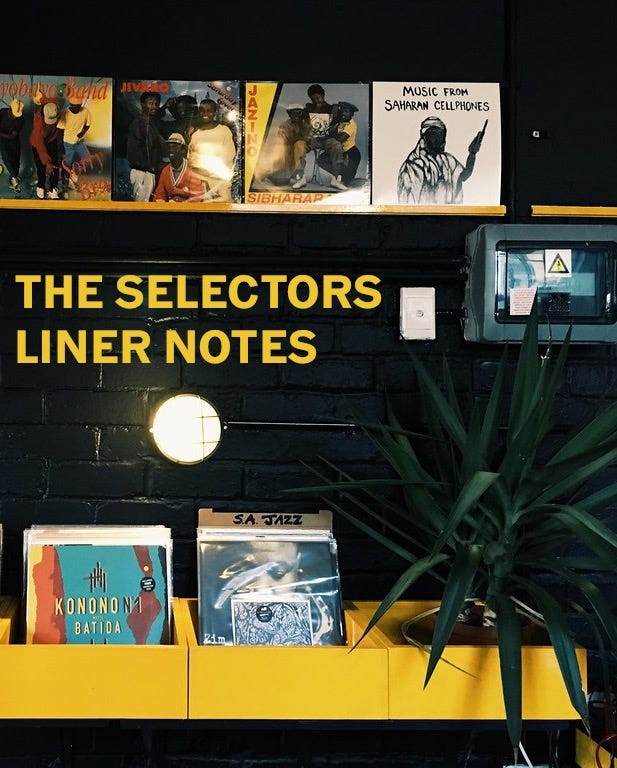
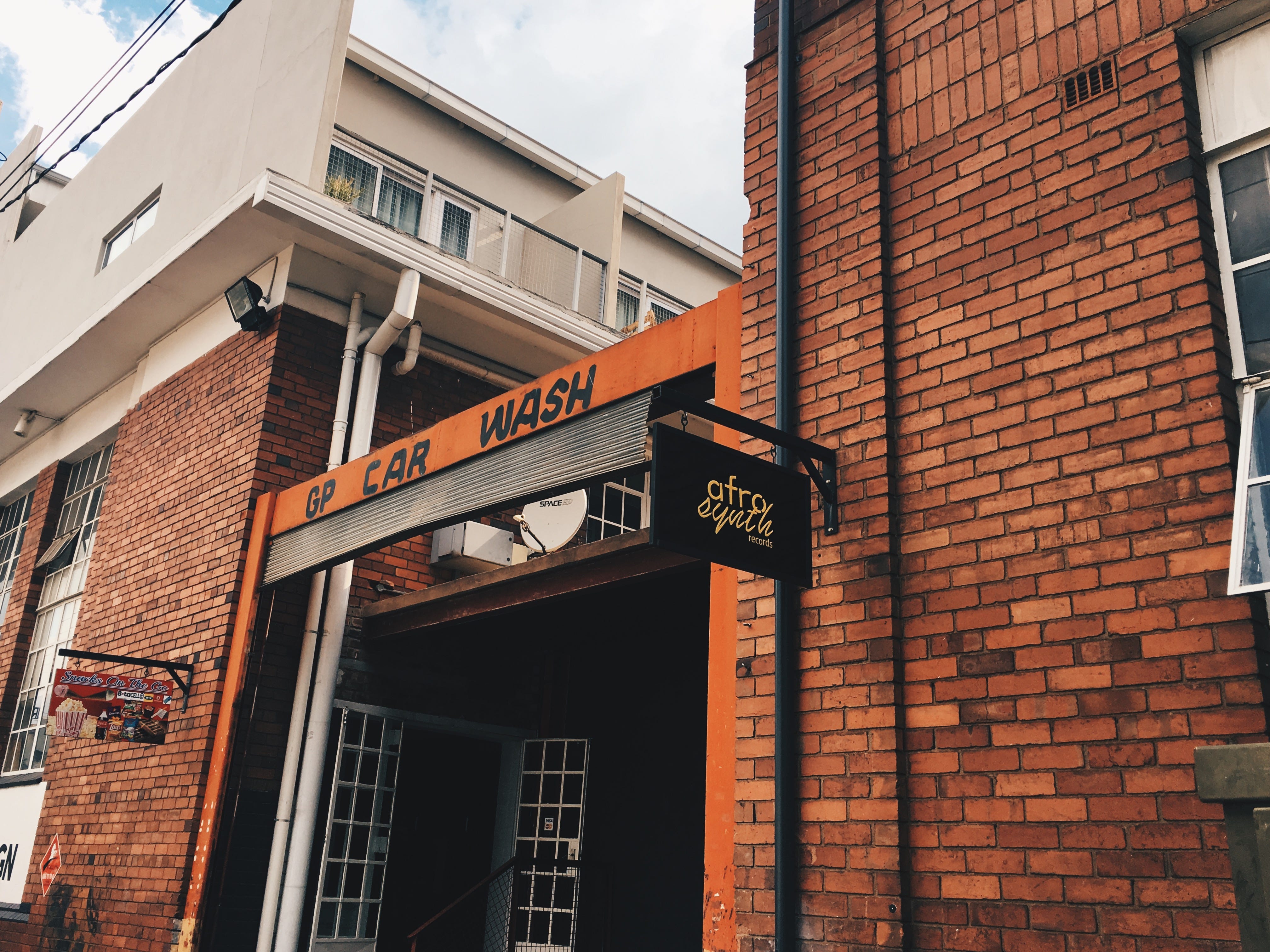
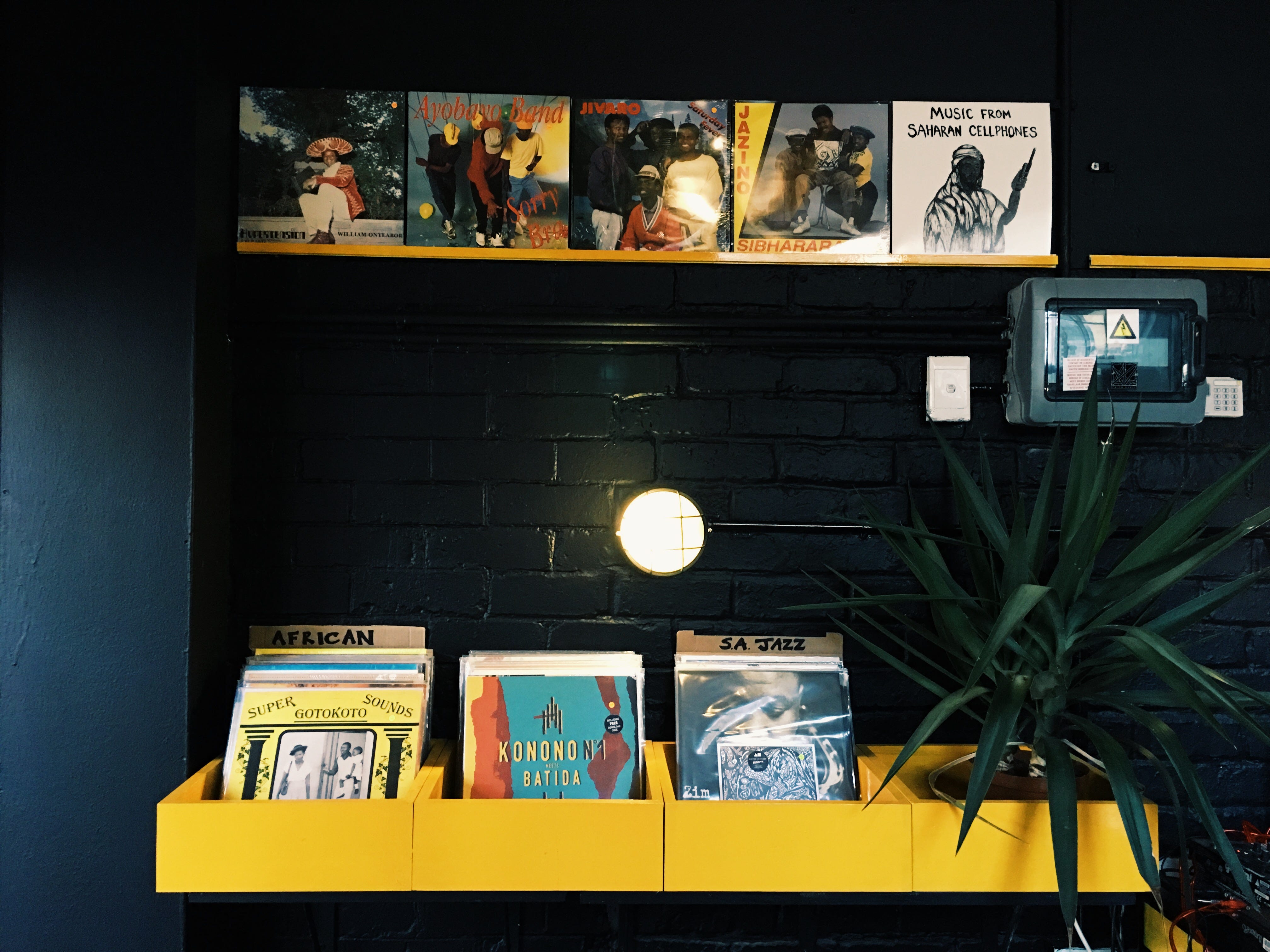
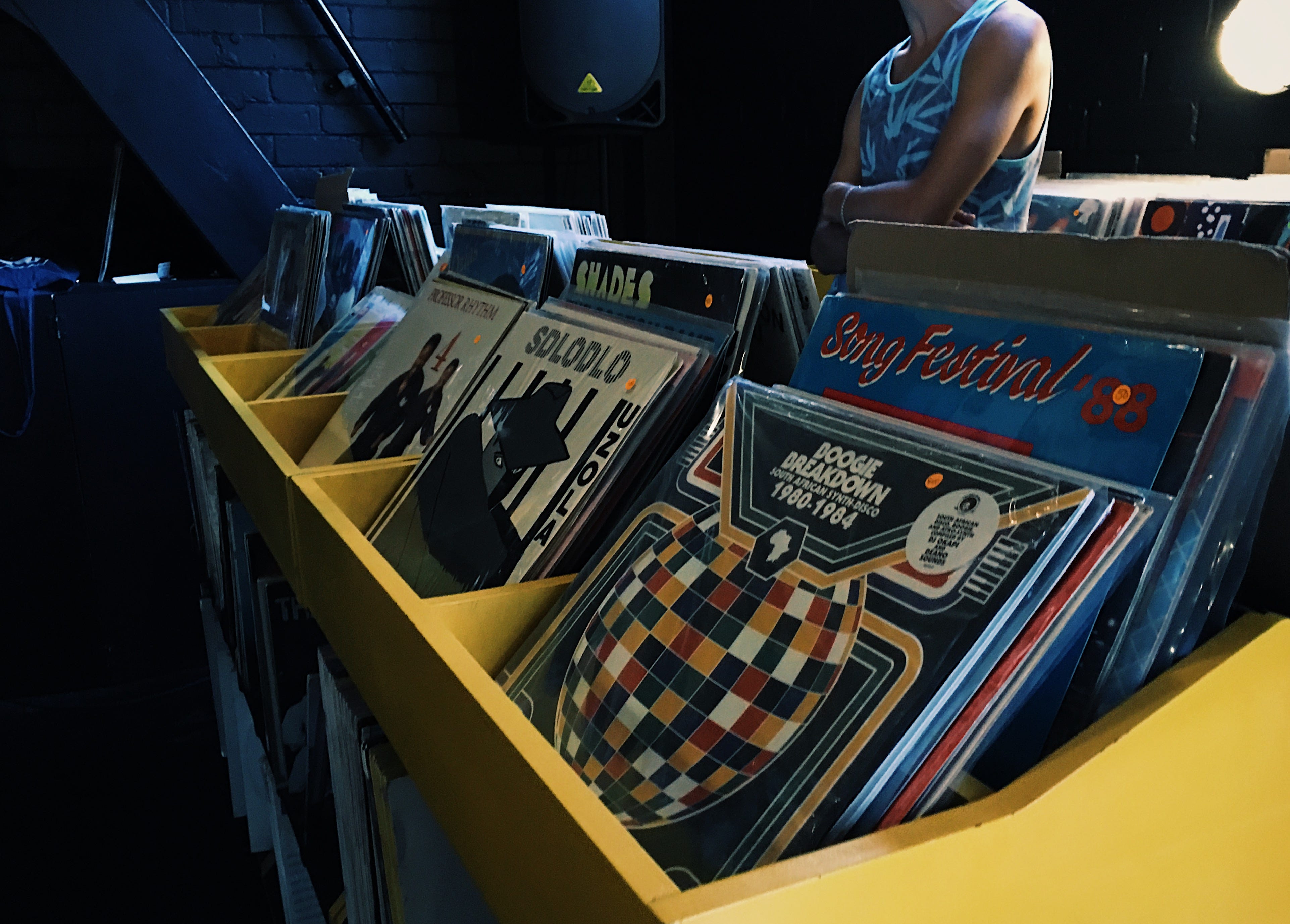
No long introduction from me on this one, the liner notes are a 20 minute read and Dave (DJ Okapi) has done a sterling job of telling the story. I visited Afrosynth Records (formally in Maboneng, JHB) in 2017 and picked up a copy of the compilation then.
I met Dave the year before in Peckham at a Boiler Room event. He put me on the guest list after chatting on Soundcloud and I proceeded to call in sick at my corporate job 2 days in a row to attend. 2 days to make it seem believable.
We subsequently brought Dave down for a night at Camden Bar Westbourne - a night of dancing to all sorts of (mainly South) African sounds and one of the nights more anchored in my hazy memory.
I hope you enjoy the notes - I did. It tells a story of suvival for minorities during apartheid, escapism and technological defiance during the global cultural boycott of the time.
Oh, and the compilation is approaching it’s 10th anniversary.
S/o Cultures of Soul.
BOOGIE BREAKDOWN: SOUTH AFRICAN SYNTH-DISCO 1980-1984
"In 1984 the world would be at war," sings Neville Nash on'Breakdown'. The song's apocalyptic lyrics may not have been a conscious reference to South Africa's volatile political situation at the time (according to the artist) as much as a nod to the long-awaited arrival of that Orwellian year, but in reality the country at the southern tip of Africa was quickly going up in flames.
Opposition was mounting both locally and abroad to the system of apartheid that attempted to segregate by law and by force all aspects of life in South Africa according to race and ethnicity. Central to apartheid ideology and policy was the notion of separate development, which held that the interests of all groups were best served by keeping them separate along prescribed racial and linguistic lines. To implement this, the government attempted to exercise control over public life and culture.
As the popular struggle to defeat apartheid mounted, the mechanisms of state power grew increasingly brutal, fueled by religious conviction and Cold War paranoia. By the mid- 1980s, a popular uprising was underway. A state of emergency was declared on July 20, 1985, putting parts of the country under martial law. This was lifted in March of 1986, only to be reinstated throughout the whole country a few months later on June 12, 1986 - a decade nearly to the day after police opened fire on protesting Soweto schoolchildren on 16 June 1976, bringing the brutality of apartheid to the world's attention.
The militarization of the state during the '80s made it difficult for South African musicians to practice their craft. Laws restricted black musicians from moving freely in urban areas and prevented artists of different races playing together (and those of the same race playing to mixed audiences. At the same time, the government had long used music to promote apartheid by actively promoting certain music that was seen to encourage separate development and censoring music that did not. Its primary means of doing both was the South African Broadcasting Corporation (SABC), particularly its network of radio stations, each aimed at specific language groups.
The combination of repressive laws and government interference in the South African music industry made it impossible for musicians to write, record and perform whatever and wherever they wanted. Besides a creative climate fraught with political and financial restrictions, intimidation at the hands of police was common, with touring around the country (let alone beyond its borders proving a risky endeavor.
"We were slaves in disguise!" musician 'Funky' Masike Mohapi told me in December of 2009. "Apartheid killed us, man, it killed us. I'm telling you, if it was not for apartheid, I'm sure most of us would have gone far, very far..."
Incongruously, the local recording industry was coming into its own in the '80s, with companies like Gallo, EMI and a growing number of successful independent labels churning out millions of LPs for listeners who were embracing local artists, including those who successfully fused American soul music with local influences. By 1983, with the release of Brenda & The Big Dudes' Weekend Special' (borrowing heavily from American funk acts BB&Q Band and Sharon Redd), the synth-fueled 'bubblegum' era had begun.
With the country's black political leaders and organizations having long been banned, exiled, imprisoned or murdered, musicians emerged during this time as central figures in the anti-apartheid struggle, effectively using their music to educate and socialize (as well as entertain) the people. Their effectiveness in doing so culminated in 1985 at the historic Concert In The Park at Ellis Park stadium in central Johannesburg, which drew a mixed audience of well over 100,000 to enjoy music by South Atrica's biggest black, white and mixed race musicians.
Internationally too, musicians played a central role in the fight against apartheid, with many writing anti-apartheid songs (such as the collaborative single 'Sun City' in the USA in 1985) or putting their weight behind anti-apartheid causes (such as the concerts at Wembley Stadium in London in 1988 and 1990).
The structure of the global music industry, with South Africa at its periphery, aided by the long-running cultural boycott (enforced by the United Nations and various anti-apartheid organizations around the world) prevented the vast majority of South African pop music of that era from ever being heard outside the country (with several notable exceptions). Today most of this music has never been digitized and risks being lost to future generations.
The songs selected for this compilation don't necessarily represent the biggest hits of the era (some were; others tanked). They are simply a small sample of South African pop music from the first half of the decade, by key artists in the often-overlooked story of South African music. From the electric soul of The Cannibals and Harari to Neville Nash's funked-up makeover and the rise of synths and drums machines with new stars like Benjamin Ball, Al Etto and Don Laka, these are songs that remain so fresh today that they demand to be heard - on vinyl.
These are also songs that would soon usher in a host of imitators. During this time the influence of American pop acts - most notably Michael Jackson and Kool & The Gang - on South African pop music is obvious. Lyrics were typically in English (to ensure radio play across the various 'ethnic' radio stations), basslines were funky, and producers strived to use the latest synth sounds of the day.
This would soon change in the second half of the decade, when local artists and producers managed to craft a more indigenous sound and local artists succeeded in outselling their American counterparts for the first time. These tracks, hand-picked from between 1980 and 1984, are where it all began.
HARARI - 'PARTY' AND 'GOOD VIBES' (1980)
Formed by schoolmates in the late '60s in Soweto, the Beaters changed their name to Harari after a three-month tour to Zimbabwe in the mid-70s and quickly established themselves as one of the hottest bands in South Africa, backing touring American stars like Percy Sledge, Brook Benton and Wilson Pickett. In 1978 Hugh Masekela invited the band to the USA, but on the eve of their departure leader Selby Ntuli died. The tour fell through and drummer Sipho 'Hotstix' Mabuse took charge, leading the band in a more commercial, flamboyant direction.
On vocals and guitar (replacing Ntuli and guitarist Selby ‘Saitana' Nzimande', who also died under mysterious circumstances), in stepped Masike Mohapi, a rock-obsessed axeman with super-charged vocal cords. In line with the band's penchant for groovy nicknames, Hotstix promptly dubbed him 'Funky' and the nickname stuck. "I used to play funk, you know. My guitar playing was funky when I joined Harari," he told me at his house in Pimville, Soweto in 2009.
Harari's biggest album, 1980's Heatwave, is a landmark Afro-rock release, polished enough to later be released in the USA, where Harari signed a two-album deal with A&M Records, which invited them to the country to remaster the album for American audiences. In 1982, two years after its release in South Africa, 'Party' hit number 45 on the American Disco Hot 100. Another track from the same album, 'Good Vibes,' shows off the band's organ-fueled sound and Mohapis inimitable vocals.
Harari's hugely popular live shows, complete with the band member's trademark space-cadet spandex, reflect the dizzy escapism the band offered audiences during a time that otherwise offered people very little to celebrate.
The band's 1981 follow-up Flying Out was a poorer effort, and they disbanded at the end of 1982, although new line-ups continued to release albums under Mabuse's leadership. The original members parted ways and launched their own successful careers, most notably Mabuse and bassist 'Om' Alec Khaoli (with Umoja), as well as 'Funky' Masike, who had some minor hits in the mid-'80s.
THE CANNIBALS - 'HEY TONIGHT’ AND 'WE KEEP ON KEEPING ON' (1981)
Founded in 1972 and led by Ray Phiri on guitar, the initially instrumental Cannibals in 1975 paired up with soul singer Jacob 'Mpharanyana' Radebe on producer West Nkosi's advice. As Radebe's backing band, they recorded a string of hits over the next four years. Radebe died at the peak of his fame. As with Harari, the frontman's death forced the remaining members to change course.
Released in 1981, Put Your Dancing Shoes On is eight tracks of rock-solid disco-funk, their second album since Radebe's death. It features long-forgotten classics like 'Hey Tonight,' 'We Got Them Dancing', 'Get Off My Way' and 'We Keep On Keeping On.' In the words of journalist Elliot Makhaya, who wrote the original sleeve notes, "Unless you have iron socks on, this item will get ya strutting across the dance-floor!"
"It's like a feast of cannibals. But not the feasting on their own kind. It's just a musical feast, dad! The Cannibals burn brightly and have proved inexhaustible. They deliver a soul-brew to warm ya aching soul."
Importantly, Put Your Dancing Shoes On marks the beginning of Phiri's career as a lead vocalist. Behind him was Ephraim Hlophe on keyboards, Richard Shongwe on bass and drummer Isaac Mtshali, with Mac Mathunjwa as a 'guest' string and synthesizer arranger. The album was produced by the late Marks Mankwane of Mahlathini & the Mahotella Queens.
The Phiri-led version of The Cannibals links the days of South Africa’s ‘Soul Explosion’ in the late 1970s to the funked-up early 80s. “We started hearing funk bands and things like that,” Phiri told me during an interview in his hometown of Nelspruit in 2010. “It was more based on the groove, so it was more interesting.”
Struggling without their famous frontman Mpharanyana, The Cannibals' fanbase dwindled. They released one more album, Total Rejection, that year. "I was thinking, people are so stupid," remembers Ray. "Why can't they see that the guy became a superstar through my songs that I was writing? The Cannibals were already there, he came and joined the Cannibals!"
The Cannibals soon broke up, merging with members of The Movers to become the mighty Stimela (after a short stint as Kumasi), a few years later playing a central role in Paul Simon's Grammy-winning Graceland album.
NEVILLE NASH - PERFECT LOVE' AND 'BREAKDOWN' (1984)
Neville Nash was one of the funkiest guys on the South African scene since the 1970s, years before the rise of bubblegum. After parting ways with his band The Miracles, he went solo and released a string of popular but relatively tame soul albums, like 1980's Kind Hearted Man, Wind Me Up and Neville Nash in 1981, and 1982's Diamonds & Pearls and Solid Gold. During this time some of his singles were released in Europe, with one, 'It's a Real Good Feeling', narrowly missing the charts in the Netherlands in March of 1981.
In 1983 Neville trimmed the 'fro, grew a'stache and cranked up the synths, releasing the single 'Love Me Now/Funky Feelin' ahead of arguably his finest album, 1984's Teaser. Tracks here include the terminally funky 'Perfect Love' and 'Breakdown,' as well as 'One of Those Nights,' a hit he famously performed live at the historic Concert in the Park in 1985.
One of the pioneers of multiracial 'crossover' music, Nash defied apartheid to work with a variety of black, white and mixed race musicians on the album. Players on Teaser include drummer Isaac Mtshali (The Cannibals) and his Stimela bandmates Lloyd Lelosa (synths) and Ntokozo Zungu (guitar), as well as Al Etto and Cecil Mitch on backing vox. Mac Mathunjwa on Fender Rhodes and synths, and Mike Faure on sax. Programming was by Adrian Strydom, who famously owned the only Fairlight in the country at the time.
"I wanted a little bit of a dancing, uptempo thing to break away from the slow stuff," Nash told me during a telephone interview shortly before the release of this compilation. "That was the time of disco and all that, so I wanted to come up with something new." Part of the success of Nash's makeover was his constant quest for the latest sounds. "At that time, most of the guys who were into new sounds, I would approach them and ask, 'What would the new sound be in the next few years? We would listen and choose. It's what I feel; you don't know if it's a Korg or Yamaha. My concentration was more on the vocal. The producer would normally come up with the sound, and I would say 'not this one, or that one.' It's what my ear tells me, what's inside. Sometimes I would make a sound with my mouth. When a song comes to me, I would hear maybe a Moog or a bass sound down there, and something on top. I hear it. I would explain it to the keyboard player, and he would find the sounds."
"Thank God I've got a good ear, it helps in the studio. I can listen to a song and hear immediately. If someone had to sing something, I can immediately hear if he or she needs teaching on breathing. Like a doctor would know exactly what to prescribe to you!"
Teaser was followed by the single What's Your Name? What's Your Number? (1985) and Why? (1986). Today Nash still regards himself as a soul man through and through. "There's been soul music from the '60s even up to now. Rock 'n roll was taking over in the 70s, but soul was still there. Even through the disco '80s, soul was there. I can't say I can label my music, but I just try to put in a lot of feeling. When I sing, I try to do it with everything I have, which people will call soul."
BENJAMIN BALL - FLASH A FLASHLIGHT AND I JUST KEEP DANCING'
Born Benjamin Msane in Durban, Benjamin Ball grew up in Cape Town and learned the guitar as a teenager before moving to Johannesburg to pursue his music career, initially doing shows on the mines alongside the popular mbaqanga group Abakwhenyana, under the guidance of producer Simon Ngwenya. He then joined the bubblegum hitmakers CJB. Inspired by the burgeoning reggae scene as well as the latest pop trends, together they recorded some long-lost tracks, one of which was banned by the SABC, a common occurrence at the time.
Jaded by the threat of obscurity and censorship, Ball went solo. In late 1983 he teamed up with two of the local industry's top producers of the time, Blondie Makhene and John Galanaks, to record a new track of reggae-tinged disco music, titled ‘Flash a Flashlight.’ The single came out a few months after Brenda & The Big Dudes' 'Weekend Special' and soon became the second anthem of the bubblegum era.
"Blondie had just done 'Weekend Special' and after that he wanted a new artist," Ball told me in 2015. "He came with me to John Galanakis. We programmed the music there, the whole drumbeat. Then everything just came together. I came and started singing the words, just like that, out of my heart - banging them, one way. After that, the song just went... It was not so long actually: it took one day. John is the main guy who gave it the groove. He hit that style and when I started singing, he was like 'wow!' It was Blondie and John and me, the three of us."
The song became a massive hit, rivaling 'Weekend Special’. "It was played by the SABC on all the stations. I was doing interviews all over the country; I went to all the radio stations. When I came to Pretoria, the album sold gold. One record bar sold 25,000 units of ‘Flash a Flashlight.' They gave me, a gold disc. Just in one record bar in Pretoria it made gold. That guy was selling it like cakes! Everybody wanted that song, it was going like mad." The song's popularity led to live performances all over the country. "When I came with 'Flash a Flashlight,' I couldn't get off the stage. People didn't want to me leave. They were throwing panties on the stage. They were going crazy! I had to do the song over and over because I didn't have another track. So I sat down to start working on a follow-up, and I came up with the album.
Ball employed the help of top soul group The Black Five, which included singer Nana 'Coyote' Motijoane (later of Stimela), to back him live and to help write new material. ‘Flashlight' was soon included in a full-length album, Paulina (1984), which unsurprisingly went gold, establishing Ball as one of the leading solo acts of the day.
Another song from the same album, 'I Just Keep Dancing,' is a similarly styled synth and drum machine-fueled track that also reveals Ball as one of South Africa's earliest rappers, well before the first traces of hip-hop later in the decade.
DON LAKA - I WANNA BE MYSELF AND 'LET'S MOVE THE NIGHT' (1984)
A classically trained multi-instrumentalist, Don Laka began his career in the '70s with The Flood before joining seminal jazz outfit Sakhile in the early '80s. Already an established musician by this time, Laka was at the forefront of exploring the latest synth sounds of the day. "I was one of the first people in this country to use electronics," he said when we met in Johannesburg in early 2016. "I was introduced to synthesizers by my friend from Harari, Alec Khaoli. That was my first experience. I came from a jazz band, Sakhile, where I was only playing Fender Rhodes, that was the closest... but I had a computer, a Commodore 64 that used for programming.”
"When I left Sakhile, I went and joined another band, played in a club in Swaziland I think. When I came back, Alec called me and said he wanted a keyboard player for Umoja. They'd just recorded an album in L.A. When he said I must come and play keyboards, my thinking of keyboards was only one thing: Fender Rhodes, nothing else. Then I get to his studio, I see an Oberheim, I see a vocoder, see a Juno, I see a Prophet 5... I said, "What are these things?" He said, "This is what they used in the US to make Umoja's music." He brought them here. I said, "I've never played these things and I'm not gonna play this stuff!" He said, "No, this is the sound!"
"I learnt about having my own studio - once you have your own production at home, you can do anything. I started learning to play the synths. I was amazed that they could emulate an orchestra - I've always loved orchestral music. I could program the stuff. I could make it sound like whatever I wanted it to. It was expensive, but we were making money then... A lot of guys were not programming, but I made sure that I get my own sounds by programming, so my synths will always stay fresh."
Constantly striving for the latest sounds, Laka's early explorations culminated in his debut solo album, I Wanna Be Myself. "I went and did an album, recorded tracks at Downtown Studios [in downtown Johannesburg). Most of the album, except for 'Let's Move the Night,' was done straight with a Fairlight at a different studio, of the guy that owned the Fairlight, Adrian Strydom. He was the only guy in the country who had a Fairlight, I think on the continent."
"This was the first commercial record made on a Fairlight in this country. I remember the other instrument used was Jupiter 8, which was a very expensive Roland synth, and I used a Juno-60. I would layer them. The only thing I programmed was the drums. You can hear the snare sound, I think it was a mix of some cracked bottles and something that we just mixed."
"When FM sound came, it took me away from the big analogue sounds of the Juno's and stuff. So I did this with a D7 and I programmed with my Yamaha - they had a computer that was dedicated to music. I programmed in there, and played my keyboards. The whole album was done on FM sounds... It had FM synthesis, so very hard sounds. We did the whole album with FM synthesis. That's how I got to understand FM synthesis and analogue synthesis."
Holed up in the studio, Laka remembers getting special input on I Wanna Be Myself from master bassist Bakithi Khumalo, who would also feature prominently on Graceland. "I remember I played all the instruments on it. I played bass, I played all. Bakithi walked into the studio and I said, 'You know, I'm not a bass player. Baks, do you wanna do it?' And he nailed it, in one take!"
As with the other tracks on this compilation, Laka's music from this era shied away from the political, a trend that would change drastically in subsequent years. "It was just a pop album," he confirms. "l would just keep my lyrics [non-political] because I'd been in trouble with government back then. In the '70s they banned two of my songs... I decided the only way for me to survive is either to hide the message, which in the late '70s I was doing a lot, but this was just straight disco.... It was played on radio all the time, both these tracks actually. It was on all the stations."
Following the success of I Wanna Be Myself, Laka went on to form a new group, Image (later Ymage), with members of Khaoli's defunked Umoja, which enjoyed success into the early '90s, at which time he established himself further as a producer and boss at seminal kwaito label Kalawa Jazmee. As a musician he has continued to release regular solo releases, returning to jazz and also venturing into classical. He remains a prolific composer and in 2016 played a central role in convincing the SABC to institute a policy that forces more local music to be played on the airwaves.
AL ETTO - YOU'VE GOT THE LOVE' AND HOLD ON TO LOVE' (1984)
Born Aldridge Aden Etto in 1953 in Grahamstown in the Eastern Cape, Al Etto was raised in Port Elizabeth and later settled in Cape Town. "I grew up with soul music, funky music - the Wilson Picketts, the Otis Reddings, the Jackson Five, that era," he told me in a telephone interview in September 2012. "The Rolling Stones, Mick Jagger - that was wicked stuff, loved that stuff."
A bankable solo artist, Etto had a string of hits in the late '70s and early '80s, including a European release of ‘This Ain't America'. He's also credited as the man who in 1978 discovered Brenda Fassie, who went on to become the countrys biggest pop star. "Brenda was a very funky musician herself," Etto recalled.
Amongst numerous 12" singles, Etto released a four-track album in 1984: Party Night. It included 'You've Got the Love" (also released as a single) and the downtempo "Hold On To Love', featuring a characteristically funky bottom end, searing synths and MJ-inspired vocals.
Etto was also highly regarded as a songwriter and a producer with an ear for innovation. He found some international success by writing child star Ricardo's 'I Love You Daddy,' released in Europe in 1986, leading to tours of Denmark and Japan. Etto also wrote 'Children of the World', a benefit song for UNICEF chosen as the theme song for the final World Popular Song Festival in Tokyo in 1989, where it was performed by Stevie Wonder and others. During his 40-year career Etto was also part of influential groups like The Invaders, The Rockets and Groove Station, and worked as a producer and songwriter for countless other artists.
Seldom one for outspoken political commentary, Etto's music was all about putting a smile on your dial. "You listen to all the tracks l've written in my life as a musician, I'm more on the positive side of doing things," he explained. "I would write beautiful love songs, I'd write a gospel song... I'm there to do positive music, not negative music. I'm not there to diss whoever there is to diss." At one point during the interview Etto was moved to tears as the memories flooded back.
Al Etto passed away in September 2013. This album is dedicated to his memory, as well as to 'Funky' Masike Mohapi (who died in September 2014) and the countless other musicians who left an indelible mark on South Africa's cultural landscape during the turbulent early 1980s and are no longer with us today. Let the funk live on!
Dave Durbach / DJ Okapi
Johannesburg, June 2016
www.afrosynth.blogspot.com